Timing
Ask when the customer has enough experience to give meaningful feedback.
Reviews affect how people evaluate a business long before they contact it. Good review management makes it easier to collect genuine feedback, respond consistently, spot recurring service problems and keep important profiles accurate.
We do not sell fake reviews, fabricate testimonials, hide incentives or promise to remove legitimate criticism. The goal is a healthier feedback system and a more accurate public reputation.
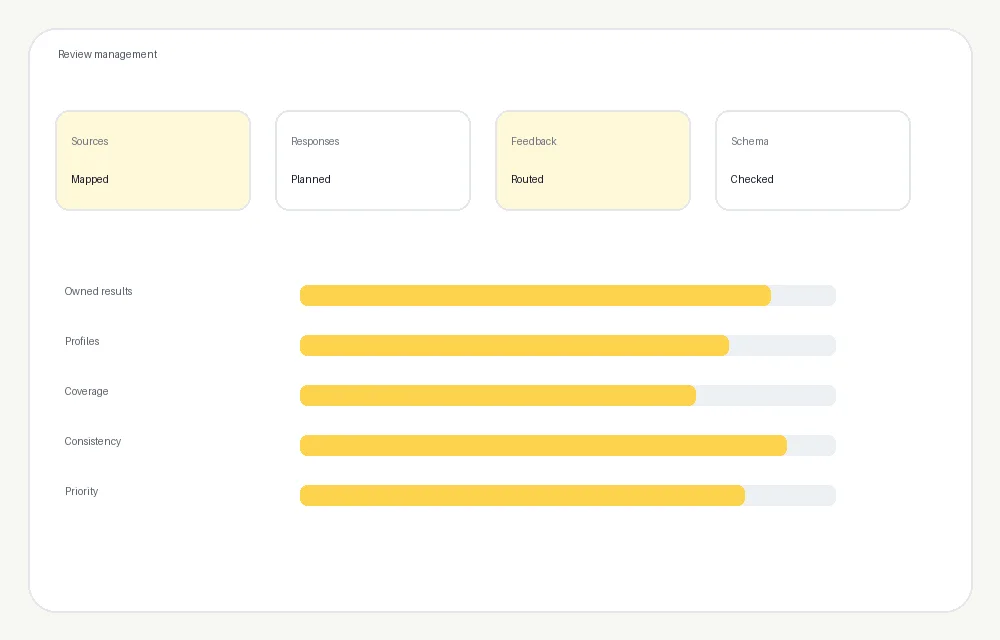
We map where feedback requests belong after a purchase, delivery, project milestone or support resolution and which review destinations actually matter to the business.
The request should be neutral and transparent. We do not condition requests on a positive experience, write reviews for customers or disguise incentives.
Ask when the customer has enough experience to give meaningful feedback.
Prioritise legitimate profiles customers already use to evaluate the business.
Connect requests to real order, CRM or service events where appropriate.
Keep staff instructions clear: no fabricated feedback, undisclosed incentives or impersonation.
We create response principles for praise, complaints, misunderstandings and sensitive cases. Public responses should acknowledge the issue without exposing private customer information or arguing about details that belong in a private support channel.
Repeated wording can make a brand look automated, so templates are starting points rather than copy-and-paste scripts.
We separate genuine criticism from spam, impersonation, conflicts of interest or content that may violate a platform’s rules. Potential policy violations can be reported through the platform’s legitimate process; genuine customer feedback should be addressed rather than falsely reported.
Where a complaint exposes a real operational problem, fixing that problem is often more valuable than trying to out-market it.
Google’s current review-snippet guidance treats reviews about an Organization or LocalBusiness on that organization’s own controlled site as self-serving for review-rich-result purposes, including reviews embedded through third-party widgets.
Review markup must also represent review content users can actually see, and fake or undisclosed incentivized reviews are not acceptable. We therefore use schema only where the content and supported type genuinely qualify.
Group themes that point to fulfilment, support, product or expectation problems.
Understand what customers consistently value without turning quotes into invented claims.
Track whether important profiles are being handled consistently and promptly.
Watch genuine review volume, themes and profile health rather than chasing a perfect rating at any cost.
Only a platform or other authorized process can remove a review. We can identify reviews that appear to violate applicable platform rules and help organize an appropriate report, but we do not promise removal or submit false complaints.
No. Reviews should come from genuine customer experiences. We do not fabricate reviews or impersonate customers.
The exact workflow depends on the business and platform rules. The request should be fair and should not selectively route only happy customers to public review platforms.
Often yes. A concise, professional response can acknowledge the issue and move sensitive details to a private channel. Some situations need escalation rather than an immediate public reply.
For Organization and LocalBusiness pages controlled by the business being reviewed, Google treats those reviews as self-serving for review-rich-result purposes. Other supported review types have their own eligibility rules.
Reviews can influence customer trust and may appear across third-party platforms and search features. We do not promise rankings from review volume or manipulate reviews as a ranking tactic.
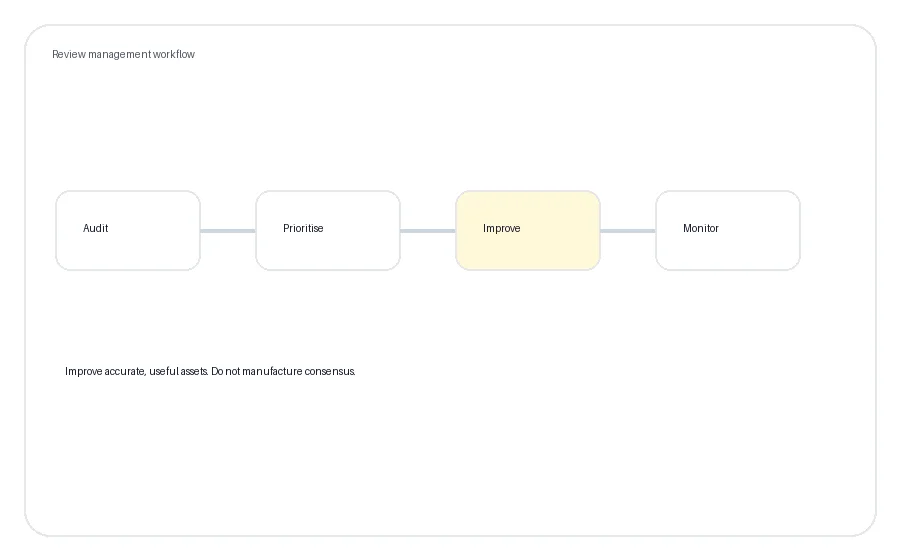
We will map the important profiles, request flow, response process and reputation risks.
Review my setup →